

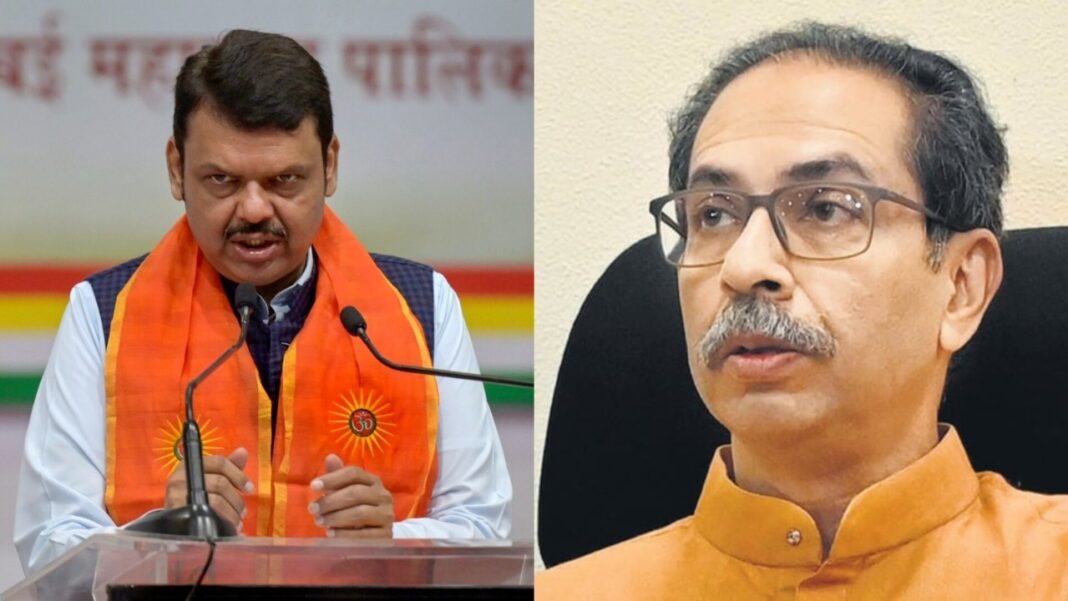


Maharashtra Chief Minister Devendra Fadnavis is in full action mode. His firm stance on appointing OSDs (Officer on Special Duty) and private secretaries for ministers has made allies uneasy. Fadnavis has made it clear that no middlemen will be appointed, even if some people are unhappy. His strict decisions may worry allies, but even Uddhav Thackeray’s Shiv Sena has started appreciating him.
Fadnavis, after returning as CM with a massive victory, has taken a strong approach. Of the 125 names proposed for OSD and private secretary positions, he approved 109 but rejected 16. These rejected names were linked to controversies or under investigation. He refused to approve any disputed or “fixer” tagged candidates, making it clear that maintaining a clean government image is his priority.
Strict Decisions by Fadnavis Fadnavis has sent a strong political message by rejecting these names. Many of them belonged to ministers from the Shinde and Ajit Pawar camps. His tough stance has created tension among allies, but he remains firm. His strategy is clear: no compromises on government integrity. This decision resembles Prime Minister Narendra Modi’s working style, where no external pressure influences decisions.
Process of OSD and Private Secretary Appointments In Maharashtra, each minister can appoint one private secretary and three OSDs, along with 35 other staff members. The CM has the authority to approve these appointments. The General Administration Department handles this, which is under Fadnavis. These appointees must be government employees, graduates, and have a clean track record with good administrative experience and communication skills.
Since ministers’ OSDs and private secretaries play a crucial role in implementing government policies, Fadnavis does not want any corrupt individuals in these positions. His rejection of questionable names reinforces his zero-tolerance policy against corruption.
Uddhav’s Sena Praises Fadnavis While Shinde and Ajit Pawar have remained silent on this issue, Shiv Sena (UBT) leader Sanjay Raut has praised Fadnavis for his strict appointments. He stated that rejecting 16 names, including 13 from the Shinde Sena and 3 from Ajit Pawar’s NCP, was a bold move. Raut even claimed that the previous Shinde government encouraged middlemen and fixers, leading to corruption. The praise from Shiv Sena (UBT) is seen as an attempt to improve relations with BJP and Fadnavis.
Tension Between Fadnavis and Shinde There is an ongoing cold war between Fadnavis and Shinde. Despite this, Fadnavis has stopped several past government decisions, such as bus purchases and housing projects, and introduced stricter policies. This has made not just the opposition but also allies nervous. Shinde warned against underestimating him, but Fadnavis remains unfazed, focusing on keeping the government’s image clean.
Modi-Style Governance by Fadnavis Fadnavis is implementing a working style similar to PM Modi’s. When Modi was Gujarat’s CM, he enforced strict appointment rules, which he continues at the PMO level. Now, Fadnavis has introduced an FRS (Facial Recognition System) in the Maharashtra Secretariat. This tracks visitors, prevents unauthorized access, and ensures transparency.
Fadnavis has also placed his trusted officers in key positions across different departments to ensure accountability. Since he is the face of this government, any controversy will directly affect him. By personally overseeing all appointments and decisions, he ensures a corruption-free administration.
Why is Fadnavis Playing Fearlessly? Fadnavis is taking bold steps because BJP has grown stronger in Maharashtra. Although he is running the government with Shinde’s Sena and Ajit Pawar’s NCP, BJP itself is in a powerful position. BJP is just 13 seats short of a majority, while Shinde’s Sena has 57 MLAs and Ajit Pawar’s NCP has 41 MLAs. Even if Shinde withdraws support, BJP can manage with smaller parties and independents.
With 138 MLAs, BJP is in a strong position. If needed, Sharad Pawar’s 9 MLAs can also provide emergency support. So, even if Shinde decides to leave, Fadnavis’s government will remain safe. This confidence allows Fadnavis to act boldly without fear of political pressure.
Conclusion Devendra Fadnavis is maintaining a tough stance to ensure a clean and corruption-free government. His rejection of controversial appointments, strict policies, and transparency measures have earned him praise even from his opposition. Despite tensions with allies, he continues to work in a “Modi-style” governance approach, ensuring that his administration remains strong and unshaken.